Building Balanced Meals: Nutritional Composition and Food Variety
A guide to understanding meal composition, the concept of nutritional balance, and how diverse food choices contribute to meeting nutritional needs.

A guide to understanding meal composition, the concept of nutritional balance, and how diverse food choices contribute to meeting nutritional needs.
Nutritional balance refers to consuming adequate amounts of all essential nutrients—macronutrients, micronutrients, and fiber—across one's diet. Rather than focusing on individual meals, nutritional balance is best understood as a pattern across multiple meals and days.
No single food is necessary for nutritional adequacy. Instead, balance emerges from the cumulative pattern of food choices, where variety ensures access to diverse nutrients and bioactive compounds.
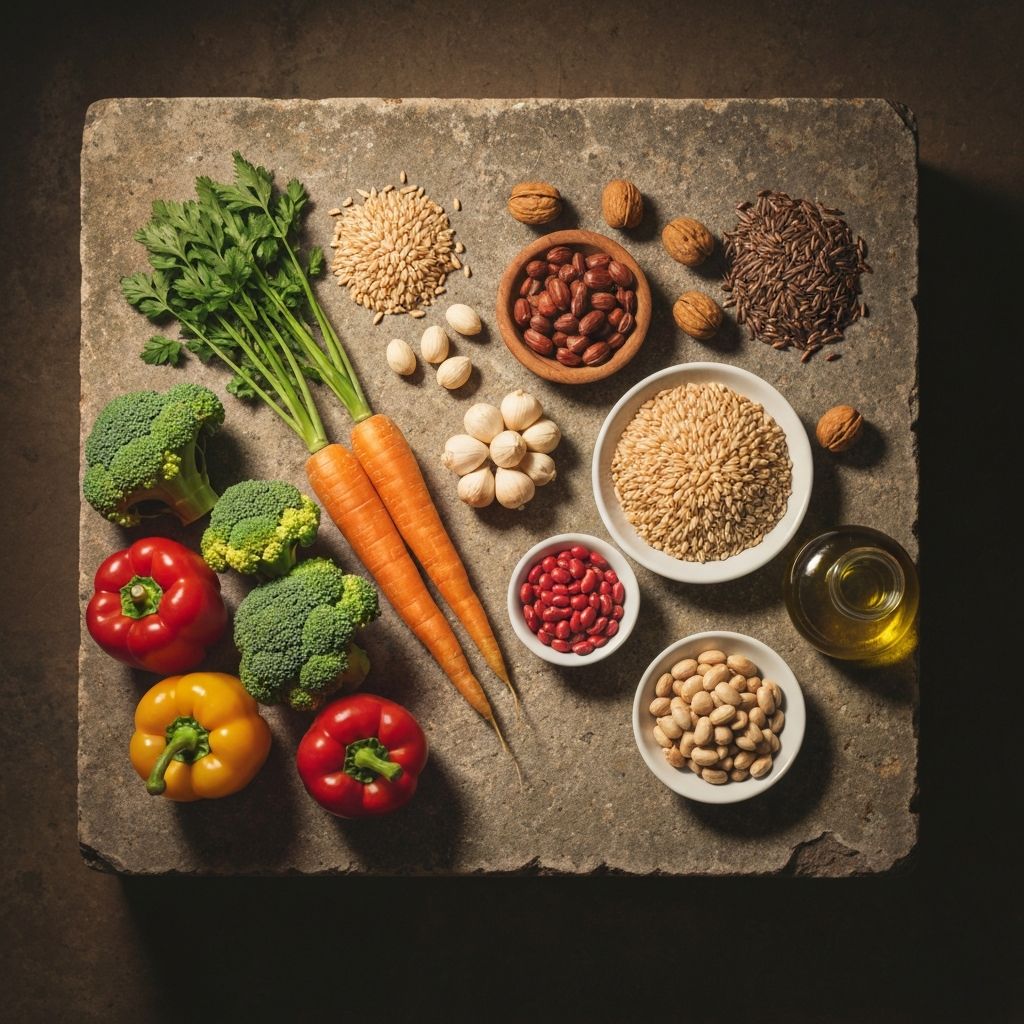
Including a protein source at meals supports satiety and provides amino acids for tissue repair. Protein sources can include animal products (meat, fish, poultry, dairy, eggs) or plant-based options (legumes, nuts, seeds, soy products). Variety in protein sources provides different nutrient profiles.
Incorporating complex carbohydrates including whole grains, legumes, or starchy vegetables provides sustained energy and fiber. These foods are particularly rich in micronutrients and support healthy digestion.
Vegetables and fruits are nutrient-dense foods providing vitamins, minerals, fiber, and beneficial plant compounds. The diversity of colors in produce indicates different nutrient profiles, making color variety a useful guideline.
Including sources of healthy fats such as nuts, seeds, olive oil, or fatty fish provides essential fatty acids and supports absorption of fat-soluble nutrients. Fat also enhances satiety and food enjoyment.
Different foods provide different nutrient profiles. No single food provides all necessary nutrients in adequate quantities. By consuming a variety of foods, individuals naturally access a broader spectrum of nutrients and bioactive compounds.
Nutritional variety includes variation across food groups (vegetables, fruits, grains, proteins, dairy products) and within food groups (different colored vegetables, different protein sources, different grain types). Temporal variety—changing food choices across weeks and seasons—further enhances nutritional completeness.
Consumers are encouraged to "eat the rainbow"—incorporating vegetables and fruits of different colors—as a simple strategy for ensuring diverse micronutrient intake. Similarly, rotating between different protein sources and grain types naturally increases nutritional variety.
Nutritional needs vary based on age, activity level, health status, food preferences, and cultural background. A meal that represents nutritional balance for one individual may not optimally serve another.
This variation means that prescriptive dietary guidance is inherently limited. Instead, the principles of nutritional balance—variety, adequacy, and moderation—provide a flexible framework applicable across diverse individuals and circumstances.
"Nutritional balance is not achieved through rigid adherence to specific foods or proportions, but through thoughtful variety that respects individual preferences, cultural traditions, and personal needs."
This article provides educational information about meal composition and nutritional balance. It does not constitute personalized dietary guidance or recommendations for specific individuals. Nutritional needs vary by person. For personalized nutrition advice, consult a registered dietitian or qualified healthcare professional.